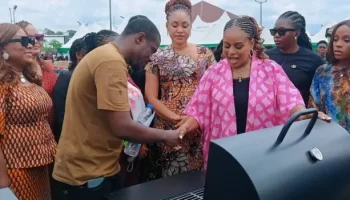

By Prosper Mene
Dr. Ibijoke Sanwo-Olu, the First Lady of Lagos State, has called for increased focus on women’s education as a critical driver for national development and societal progress. Speaking on Thursday, she emphasized that empowering women through education is essential for building a stronger Nigeria and fostering better communities.
Dr. Sanwo-Olu, a medical doctor and Chairperson of the Committee of Wives of Lagos State Officials (COWLSO), cited the transformative power of educating women during an event in Lagos. “Investing in women’s education is not just a matter of fairness; it is a strategic imperative for the growth and development of our country,” she stated. “Educated women are key to creating healthier, more prosperous, and equitable societies.”
The First Lady pointed to the ripple effect of educating women, noting that it leads to improved family welfare, economic productivity, and community development. She cited her ongoing initiatives through COWLSO, which include programs aimed at promoting education, healthcare, and empowerment for women and children across Lagos State.
She also urged stakeholders, including government bodies, private organizations, and community leaders, to prioritize policies and initiatives that ensure equal access to quality education for women and girls. She stressed the importance of addressing barriers such as poverty, cultural biases, and inadequate infrastructure that hinder educational opportunities for women.
Her advocacy is in alignment with the Lagos State government’s THEMES+ agenda, which emphasizes education and technology as pillars for sustainable development. Dr. Sanwo-Olu’s efforts have previously included projects like the ‘Adopt a Student’ initiative at the University of Lagos, which provides medical and financial support to needy students, and other grassroots programs aimed at uplifting vulnerable populations.
The First Lady’s take have been welcomed with widespread support, with many commending her commitment to advancing the welfare of women and children.